Wondering if doing planks are OK to do if you suffer from Diastasis Recti?
Many websites out there will tell you that you can do them, OR that they are off limits. Very black & white. Honestly the correct, based on research answer is in the grey area. It all comes down to how you are breathing and how you control your intra-abdominal pressure.
During the postpartum period, specifically if you suffer from Diastasis, a plank position puts a lot of pressure on your midline. During pregnancy your muscles have expanded out to accommodate for your growing baby & need to be reconnected & healed.
If you suffer from Diastasis Recti, it is even more important to connect to your breath & be cautious of moves such as full body planks. Download your FREE POSTPARTUM GUIDE so you can understand how to start breathing to heal your diastsis recti.
Here are 5 Plank Progressions that are Ideal for you to use if you suffer from Diastasis Recti, are pregnant or at any point in your postpartum journey.
Please Note for pregnancy: During pregnancy there is a lot of weight being put on your mid-line in a plank, typically it is best if you switch to a modified version by the second semester. If you experience coning or doming at any point before this stop. REFER TO THIS POST IF PREGNANT
5 Plank Progressions for Diastasis Recti
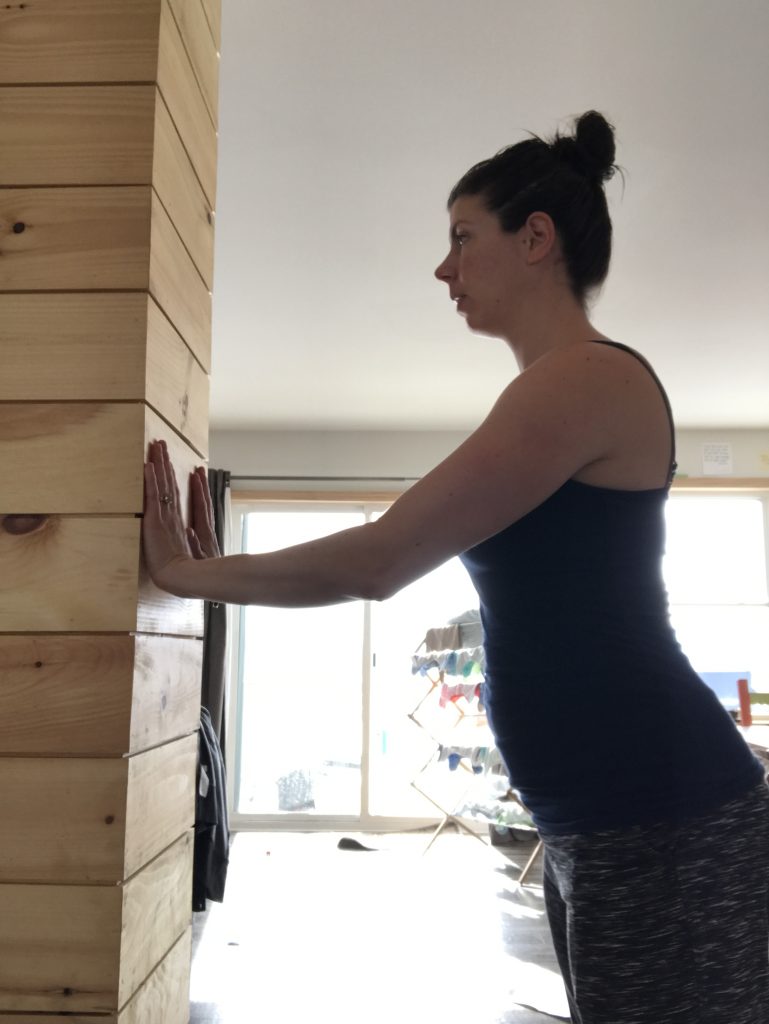
ON A WALL:
Using a wall for support; you can put yourself in plank position; being sure to keep neutral pelvis, shoulders back & down, head in line with your shoulders. You can hold a plank here, you can pulse it out, do push-ups in this position or even do shoulder taps. Great position to do deep core breathing.
CHAIR OR COUCH:
You can use a chair or a couch to prop yourself up on, kneeling on the ground and leaning onto the object. Again you can do shoulder taps, pulses or just holding this pose as you practice your core belly pump breathing
KNEE MODIFICATION:
As you attempt to go into a full plank position, put your knees down to take pressure of your mid-line. You can do shoulder taps here, pulse it out, do push-ups in this position, modify mountain climbers even! Always be sure your back is not doming, your booty is not popping, staying connected to that core will give you the right about curve in your low back.
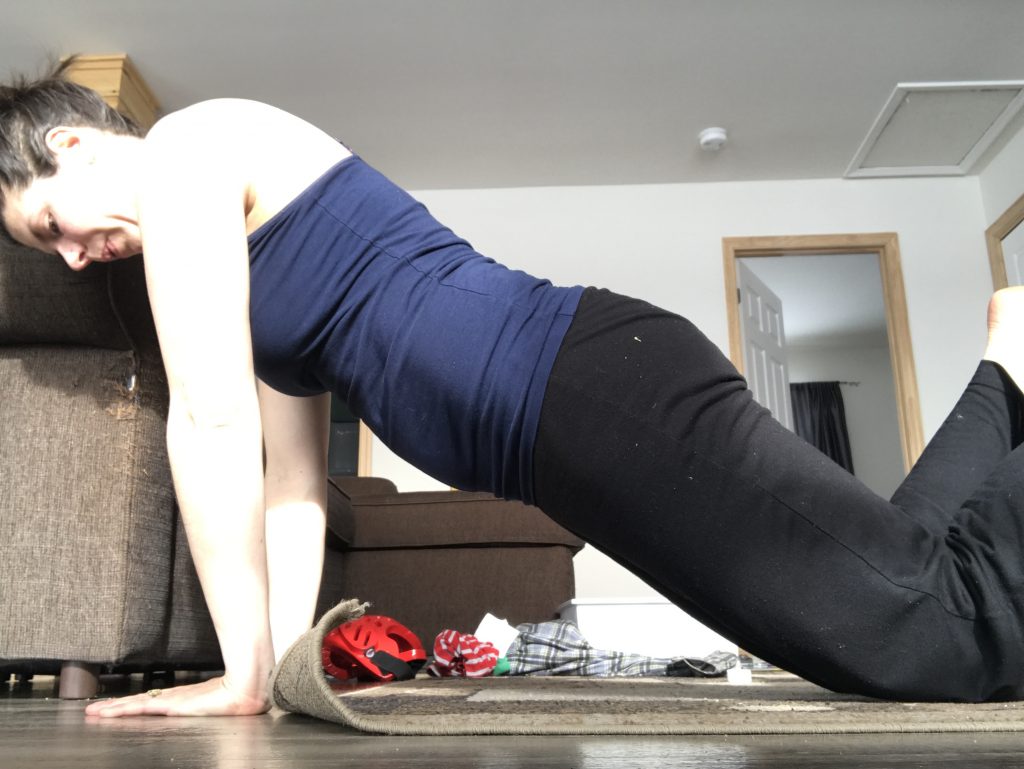
ONE LEGGED PLANK:
This is a more advanced move and takes complete core connection & breathe work to stay connected. As you start in a quadruped position, you extend one foot out behind you, toes curled heel high, on the next exhale you can leave your other knee on the ground OR you can raise your leg into the air. Keep your inner thighs engaged, glutes engaged, neutral pelvis. At any point you can put both knees back on the ground, you can alternate legs as you feel comfortable.
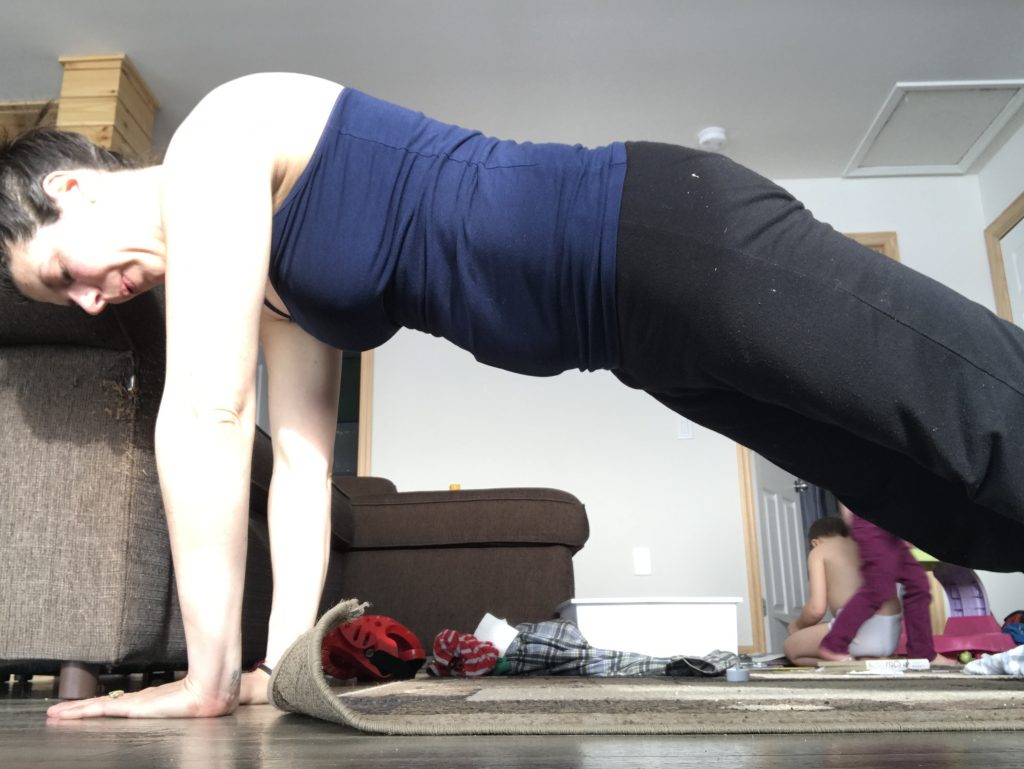
FULL PLANK
This is definitely an ADVANCED move and takes complete core connection & breathe work to stay connected. As you start in a quadruped position, you extend one foot out behind you, toes curled heel high, on the next exhale you bring your other leg down to match it, pushing your heels back, thighs engaged, glutes engaged, neutral pelvis. At any point you can put one knee down, or alternate.
**If you see ANY CONING OR DOMING IN ANY OF THESE MOVES, DROP TO QUADRUPED, CONNECT TO YOUR BREATH AND TRY AGAIN. IF YOU STILL CANNOT CONTROL YOUR PRESSURE THIS MOVE IS TOO ADVANCED FOR YOU RIGHT NOW. This is NOT a sign of weakness; it means your body is not ready for this move & that is OKAY.
IN conclusion
During the postpartum period, specifically if you suffer from Diastasis, a plank position puts a lot of pressure on your midline.
Connecting to your breath is the first thing you need to do once finding out you have a diastasis reciti AND before trying to do a full plank. Download your FREE POSTPARTUM GUIDE to learn more about this process.
Plank’s are a great position to work your glutes, core, thighs, shoulders & arms; HOWEVER, when done incorrectly you will not benefit; especially if you suffer from Diastasis recti. Take the time to learn proper core engagement & your body will thank you!
Seeing a Physical Therapist if you have Diastasis Recti is encouraged. They can provide a more thorough examination of the degree of separation.




Leave a Reply